Most of the world’s drinking water passes over activated carbon at some point before it reaches a tap. This article walks through what the carbon actually does in a water treatment train, and which properties determine whether it does it well.
What activated carbon removes, and what it doesn’t
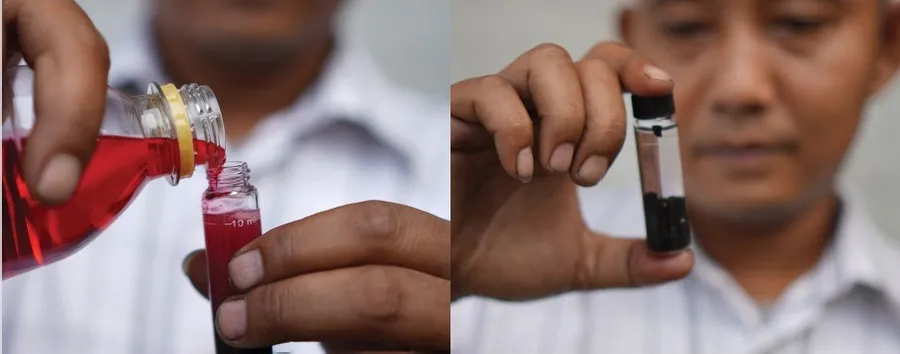
Activated carbon is an adsorbent: contaminants stick to its internal surface rather than being filtered out mechanically. It excels at:
- Taste and odour compounds: geosmin, MIB and other culprits behind “earthy” water.
- Chlorine and chloramines: including the disinfection by-products (THMs) formed during chlorination.
- Organic colour: tannins and humic substances that tint water yellow-brown.
- Industrial organics: solvents, pesticide traces and many process chemicals.
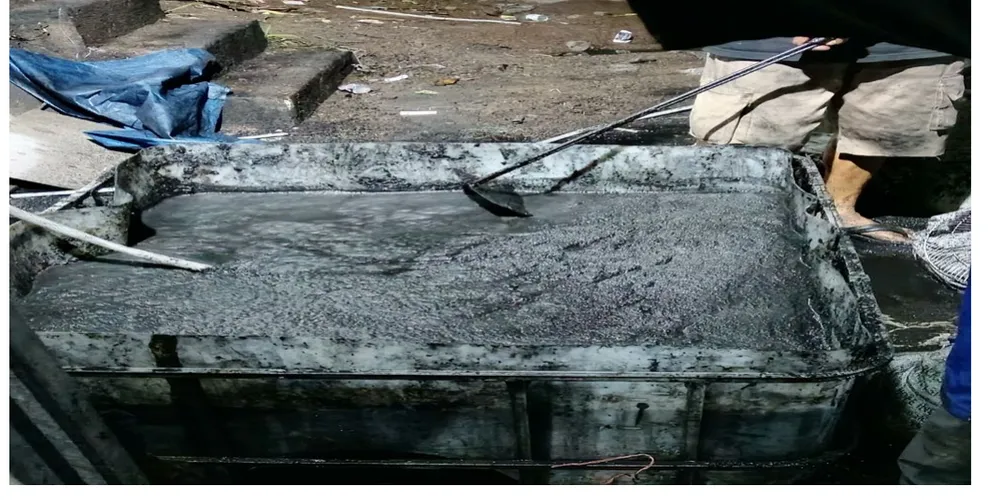
- Metal capture: specially applied carbon beds also capture dissolved metals in industrial streams.
It is not the right tool for hardness, nitrates or dissolved salts, those need ion exchange or membranes. A good supplier will tell you that plainly.
Granular carbon in the treatment train
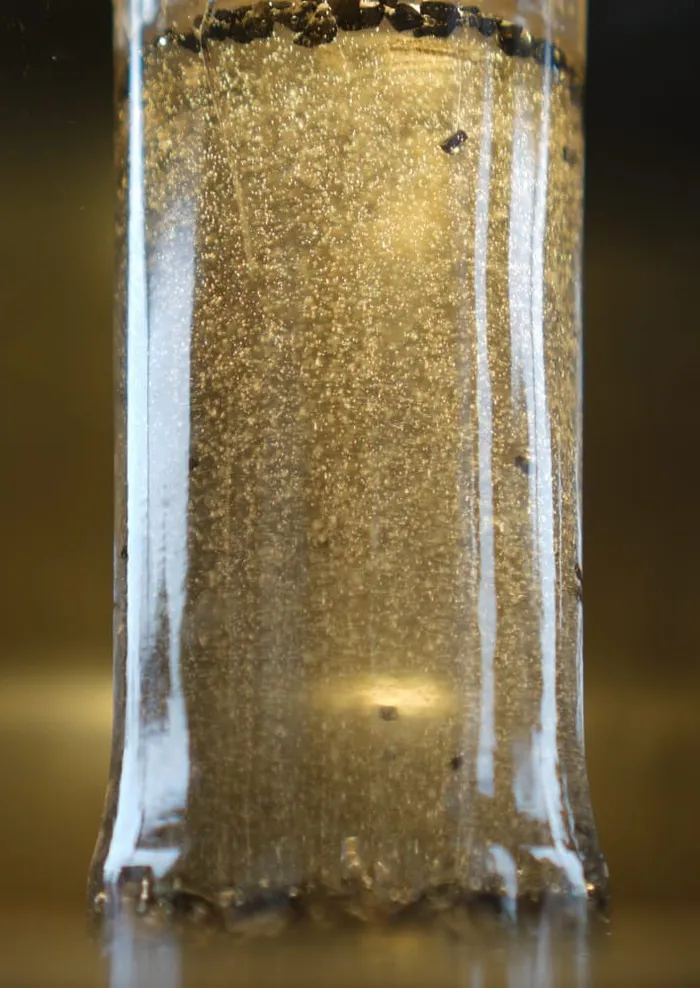
Granular activated carbon (GAC) is typically used in fixed beds: water flows through a column of granules, and contaminants accumulate on the carbon until the bed is exhausted and replaced or reactivated. Three carbon properties dominate bed design:
- Iodine number: total adsorption capacity. Higher means longer bed life for small-molecule contaminants.
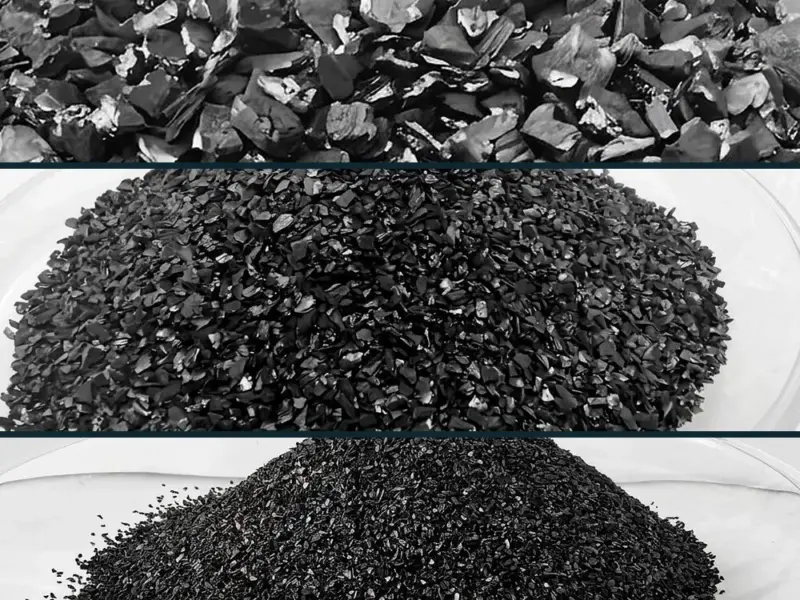
- Mesh size: granule size. Finer granules adsorb faster but resist flow more; coarser granules let you run higher flow rates. This is why we screen to three fractions (4×8, 6×12, 8×30).
- Fines content: dust and ultra-fine particles wash out of the bed, cloud the water, and clog downstream equipment. Our Sucofindo tests show nil passing mesh 325 across all grades, effectively no fines fraction.
A note on consistency
A water plant does not buy carbon once; it buys carbon for years. Batch-to-batch consistency matters as much as the first datasheet. Our three published Sucofindo reports, taken from three different production batches over three months, show pure activated carbon steady at 92.80% and bulk density steady at 0.6238 g/mL. That consistency is the property we are proudest of.
Specifying carbon for a water project? Send us your target spec and flow conditions, we will recommend a grade and mesh honestly, backed by the numbers.