Every activated carbon supplier will tell you their product is high quality. The only question that matters is: who verified it? This article explains how third-party laboratory testing works in the Indonesian carbon industry, and how to use it when comparing suppliers.
Self-declared versus independently verified
A specification sheet produced by the seller is a starting point, not proof. Numbers can be typed; laboratory analyses have to be earned. When a producer submits samples to an independent, accredited laboratory, three useful things happen:
- The sample is tested by people with no stake in the result.
- The method is standardised, results can be compared across suppliers.
- The report exists as a document with a number, a date and a named laboratory that can be contacted to verify it.
What a Sucofindo report contains
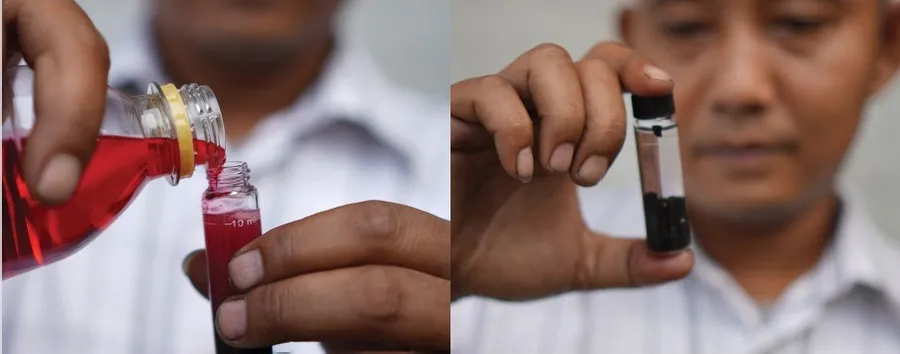
Our production is analysed by IDSurvey / PT Sucofindo, Indonesia’s state-owned inspection and testing company, at its Cibitung laboratory. Each analysis follows SNI 06-3730-1995, the Indonesian national standard for technical activated carbon, and reports eight parameters: moisture, ash, loss on heating at 950 °C, fraction passing mesh 325, bulk density, pure activated carbon content, iodine adsorption and methylene blue adsorption.
We publish our three most recent reports in full on this website, report numbers E02370/CNBPAR, E02479/CNBPAR and E02510/CNBPAR, as readable tables rather than as images or summaries. The batches were sampled over three consecutive months, which is exactly the kind of repeat evidence a buyer should ask for: one good test proves a batch, three consistent tests suggest a process.
How to use lab reports when comparing suppliers
- Ask for the actual report, not a brochure figure. Check the report number and issue date.
- Check the method. Iodine numbers measured by different standards are not directly comparable.
- Look for repeat tests over time: consistency across batches is worth more than one exceptional figure.
- Cross-check dead weight. High moisture or ash quietly reduces the adsorbing carbon in every tonne.
- Be suspicious of round numbers. Real laboratory results look like 1,279.13, not 1,300.
Transparency is cheap for honest producers and expensive for everyone else. That is precisely why we publish our figures.